
2026 PRICING GUIDE
How Much Does Concrete Landscape Curbing Cost in Temple, TX? (2026)
By Agaves Landscape Construction & Irrigation · Updated · 10 min read
Quick answer
Concrete landscape curbing typically costs about $6–$14 per linear foot installed nationally in 2026, with most homeowners paying around $8–$10, and a statewide Texas cost report puts mid-grade curbing lower, at about $4.70–$5.32 per foot.
- Plain gray curbing: about $6–$9 per linear foot installed (Calculating Concrete, national, July 2026).
- Colored curbing: adds about $1–$3 per foot for a single integral color; one 2026 guide puts colored curb at $7–$13 per foot (Calculating Concrete; Landscapio, national).
- Stamped or patterned curbing: about $9–$14 per foot, and $12–$18 for stamped-and-colored premium work (Calculating Concrete, national).
- Texas statewide: about $4.70–$5.32 per foot for mid-grade concrete landscape curbing (ProMatcher Texas cost report).
- Typical totals: about $700–$1,300 for 100 feet and $1,400–$2,600 for 200 feet, plain to decorative (Calculating Concrete, national).
- Removing old edging first: about $1–$4 per foot (Landscapio, national).
Most Temple-area front-yard curbing jobs of 100–200 feet land somewhere around $500–$2,600 depending on finish and which published rate you use, and the finish (plain, colored, or stamped) moves the price more than anything else. Agaves has not published prices; we quote each job after seeing the beds, with a free written estimate.
These are published area averages from the sources listed at the end of this guide, not an Agaves price list. Sergio prices every job after walking the property, and the consultation is free.
What actually drives the cost of concrete curbing
Five things set the price of curbing: how many feet you need, how curvy the layout is, the profile, the finish, and what has to come out of the ground first. Concrete itself is a small part of the bill. Lawn Love puts poured concrete edging material at about $3–$8 per linear foot and labor at about $1.50–$10 per foot nationally, so most of what you pay for is setup, the extruding machine, and the crew’s time.
1. Linear footage
Length is the biggest driver because curbing is priced by the linear foot. Short jobs cost more per foot, though: mixing concrete, hauling the curb machine, and cleaning out afterward take about the same time for 60 feet as for 200. Calculating Concrete notes minimum jobs starting around $325 even for small footage.
2. Curves, corners, and tree rings
Curbing is extruded in one continuous run, so smooth, sweeping curves are no harder than a straight line. Tight radii, lots of short separate beds, and rings around individual trees add setup and hand-finishing time. Landscapio lists tree rings at about $75–$250 each nationally.
3. Profile
The shape of the curb (mower’s edge, slant, roll top, square block, or a taller curb) sets how much concrete goes into each foot and how much hand shaping it takes. Simple extruded profiles sit at the low end; thicker or custom shapes cost more. Landscapio puts a plain extruded mower curb at about $6–$10 per foot and custom or extra-thick curb at $12–$25 or more.
4. Color and stamping
Finish is where the price moves most. Plain gray is cheapest, integral color adds about $1–$3 per foot, and stamping a pattern into the fresh concrete pushes the job to roughly $9–$14 per foot, or $12–$18 when it is stamped and colored (Calculating Concrete, national).
5. Removal, prep, and sealing
Pulling out old plastic, steel, or stone edging runs about $1–$4 per foot, and reshaping the beds another $100–$600 per job (Landscapio, national). Sealing, which colored and stamped curb needs to keep its color, is about $0.50–$1 per foot (Bob Vila) to $0.50–$2 per foot (Landscapio).
Concrete curbing cost breakdown by option
A curbing quote breaks down into the curb itself, priced per foot by finish, plus prep and add-ons. The ranges below are published third-party figures, labelled as Texas or national; they are not Agaves prices.
| Item | Typical range | Source / notes |
|---|---|---|
| Landscape curbing, mid-grade concrete (Texas) | $4.70–$5.32 per ft | ProMatcher, Texas statewide report |
| Concrete curbing, installed (national) | $6–$14 per ft; most pay $8–$10 | Calculating Concrete, July 2026 |
| Plain gray curb | $6–$9 per ft | Calculating Concrete, national |
| Integral color | add $1–$3 per ft | Calculating Concrete, national |
| Stamped or patterned | $9–$14 per ft | Calculating Concrete, national |
| Stamped and colored premium | $12–$18 per ft | Calculating Concrete, national |
| Precast blocks, hand-set | $7–$13 per ft | Calculating Concrete, national |
| Remove old edging | $1–$4 per ft | Landscapio, national, May 2026 |
| Sealer | $0.50–$2 per ft | Bob Vila; Landscapio, national |
| Sod repair next to the curb | $0.86–$1.75 per sq ft | Bob Vila, national |
Plain vs colored vs stamped, and which profile to pick
Plain gray mower’s-edge curbing is the best value for most Temple yards; color and stamping cost more for the look and need sealing to keep it. The profile matters more for how you mow than for the price.
Plain gray
Plain gray curbing is the lowest-cost option at about $6–$9 per linear foot nationally (Calculating Concrete). It weathers to match a driveway and sidewalk, needs no sealer to hold a color, and a hairline crack in it barely shows.
Colored
Integral color is mixed into the concrete, so it runs all the way through rather than sitting on the surface. It adds about $1–$3 per foot to a plain curb (Calculating Concrete). Earth tones that tie to the house brick or stone are the usual choice. In full Texas sun, colored curb fades without a sealer; Calculating Concrete recommends resealing every one to two years.
Stamped
Stamping presses a brick, slate, or stone pattern into the fresh curb and costs about $9–$14 per foot, or $12–$18 when combined with color (Calculating Concrete, national). It is worth it along a front walk or entry bed that people see up close, and less so along a back fence.
Profiles: mower’s edge, slant, block, and curb styles
- Mower’s edge: a low lip on the lawn side that lets one mower wheel ride the curb, so there is little or no string trimming. The most common residential choice.
- Slant: an angled face that ramps from the bed down to the lawn. Clean and simple; it pairs well with stamping.
- Roll top or curb style: a taller, rounded crown that reads as a traditional curb and holds deeper mulch or rock.
- Square block: flat top, straight sides, a crisp modern line. Hand-set precast blocks run about $7–$13 per foot (Calculating Concrete, national).
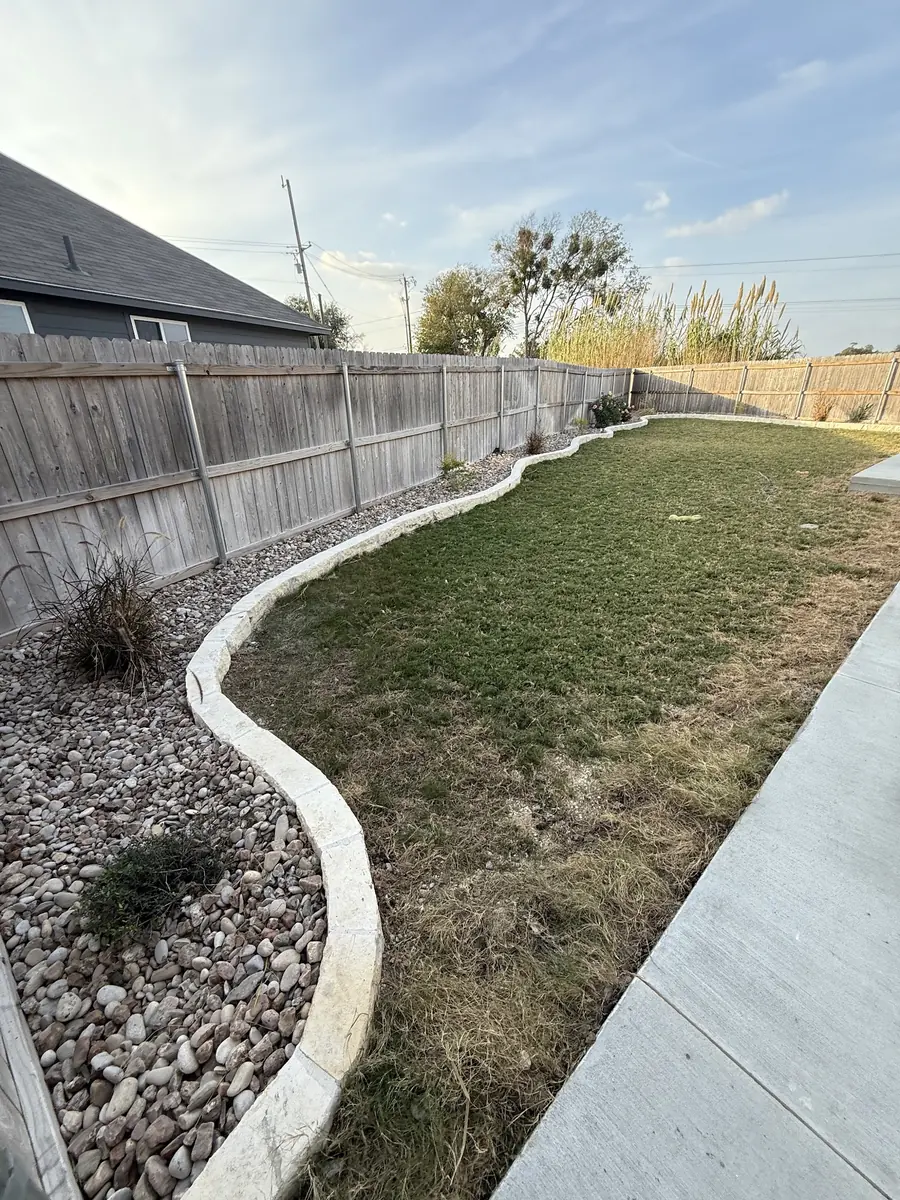
Profile choice usually moves the price less than finish does. Pick it for how the lawn meets the bed: mower’s edge where you mow right up to it, a taller curb where the bed holds rock or sits above the lawn. You can see the profiles we pour on our concrete curbing page.
Concrete curbing vs plastic, steel, and stone edging
Concrete curbing costs more up front than plastic or steel edging but lasts longer than either and does not get knocked out of line by a mower. Stone and brick look good but settle and shift piece by piece on clay.
| Edging | Material cost per ft | Typical lifespan | Notes |
|---|---|---|---|
| Plastic | $0.50–$3.50 | 3–5 years | Lifts and heaves; mower nicks it |
| Steel / metal | $1.70–$11 | 10–15 years (steel/aluminum) | Thin line; can rust or bend |
| Brick | $2–$6.50 | 10–20 years | Individual pieces shift on clay |
| Stone | $2.50–$21.50 | Varies | Natural look; wide price spread |
| Poured concrete curbing | $3–$8 material; $6–$14 installed | 20+ years | Continuous, follows curves, mower rides it |
Material ranges combine Lawn Love and LawnStarter (both national, excluding labor); installed concrete from Calculating Concrete; lifespans from Calculating Concrete and Bob Vila. Labor for most edging adds about $1.50–$10 per foot (Lawn Love, LawnStarter).
Plastic edging
Plastic is the cheapest edging to buy and the one most often replaced. Calculating Concrete puts its lifespan at 3–5 years; on Blackland clay it tends to heave out of the ground during a dry summer, and a mower blade chews up the top edge.
Steel edging
Steel gives a thin, clean line and lasts roughly 10–15 years (Calculating Concrete), with Bob Vila citing up to 25–30. It is a good fit for modern, straight-line beds. It does not give the mower anything to ride on, so you still string-trim the edge.
Stone and brick
Stone and brick borders look natural but are made of separate pieces, and on clay each piece moves on its own. Grass grows through the joints, and Bob Vila puts brick at 10–20 years.
Concrete curbing
Concrete curbing is one continuous poured ribbon that follows any curve, keeps mulch and rock in the bed, and keeps Bermuda from running into it. Calculating Concrete puts its lifespan at 20 years or more.
Concrete curbing cost by project size
Multiply the length by the per-foot rate to get a starting range. The figures below use Calculating Concrete’s national plain ($6–$9) and decorative ($9–$14) rates and ProMatcher’s Texas statewide rate ($4.70–$5.32); they are arithmetic on published averages, not quotes.
About 100 feet: one or two front beds
A hundred feet covers the beds along the front of a typical Temple house plus a tree ring. Calculating Concrete puts it at about $700 plain to $1,300 decorative nationally; at the Texas statewide rate it is roughly $470–$530. Expect the per-foot price to sit high on short jobs because of minimum charges.
About 200 feet: front yard and side beds
Two hundred feet covers the front beds and a side yard or a walk. Calculating Concrete’s national figure is about $1,400 plain to $2,600 decorative; at the Texas rate it works out to roughly $940–$1,060. Landscapio puts 200–300-foot full-yard projects at $1,500–$4,500 or more.
About 400 feet: front and back yard
Four hundred feet is a full front-and-back layout with island beds. At the national plain rate that comes to about $2,400–$3,600, and at the decorative rate about $3,600–$5,600; at the Texas rate, roughly $1,880–$2,130. Long runs are where the per-foot price drops, because setup is spread across more feet.
Clay, heat, and cracking: what to expect in Temple
Concrete curbing in Temple will crack at some point, and the goal is for it to crack in straight, planned lines rather than randomly. Blackland Prairie clay swells when wet and shrinks when dry, and a curb is a thin ribbon with no deep footing, so it moves with the ground.
Control joints are cuts scored into the fresh curb at regular intervals; Calculating Concrete notes crews score them every couple of feet. When the clay shifts, the curb cracks at a joint where you cannot see it, not across the middle of a section. A curb poured without them, or with them too far apart, tends to crack at random.
- Prep the path: the trench should be cut to firm soil and compacted, not poured over loose fill or fresh sod. A poorly compacted base is one of the usual causes of cracking.
- Steady watering: clay that swings from soaked to bone-dry moves the most. Even watering along the beds under the drought rules keeps the curb steadier.
- Tree roots: live oak and other shade tree roots can lift a curb over years. Keep the line a little off the trunk and use rings with room to grow.
- Rockier ground west: toward Killeen and Harker Heights, limestone close to the surface is a firmer base but can take more work to trench. See our Killeen curbing page.
Summer heat also matters on pour day. Concrete sets fast in July and August, so crews start early. Lawn Love and Bob Vila both note concrete takes about 28 days to fully cure, so keep heavy equipment off the curb for the first few weeks.
Local factors in Temple, Belton, and Killeen
Four local conditions change curbing cost here: soil, grass type, HOA rules, and timing.
- Soil: Blackland clay in Temple and Belton needs a well-compacted trench; rockier ground toward Killeen can mean slower trenching.
- Grass: Bermuda and St. Augustine both spread by runners and push into beds. Curbing stops them at the surface; a mower’s-edge profile makes trimming along it quick.
- HOAs: newer subdivisions in Temple, Belton, and Harker Heights often want curb color approved. Ask before choosing a colored or stamped finish. Our Belton curbing page covers the area.
- Timing: curbing pairs well with new sod or a bed redo. Doing it with sod installation or a landscape design project means the lawn edge is cut and repaired once.
The 10–20-year view: curbing vs replacing edging
Over 10 to 20 years, concrete curbing usually costs less to live with than plastic edging because you pour it once. At a 3–5 year lifespan, plastic edging may be replaced three or more times in the time a concrete curb lasts, and each replacement means new material, labor, and a torn-up lawn edge.
The ongoing cost of a concrete curb is small: resealing colored or stamped curb every one to two years, and occasionally patching a chip. Plain gray curb can go without sealer. Steel sits between the two, lasting 10–15 years by Calculating Concrete’s figures, but it still needs trimming along the edge every mow.
Mistakes that cost homeowners money
1. Hiring on price alone
The lowest bid is often the one that skips trench compaction or spaces control joints too far apart. The curb looks the same on day one and cracks at random after the first dry summer.
2. Laying out the line in a hurry
The curb is permanent, so the bed shape needs to be right before it is poured. Mark it with a hose or paint, walk it with the mower, and leave room for shrubs to grow.
3. Choosing color without planning to seal
Colored curb in full Texas sun fades without regular sealing. If you will not reseal every year or two, plain gray is the better buy.
4. Ignoring the sprinklers
A curb poured in front of a spray head blocks it, and a curb poured over a line makes the next repair harder. Sort out the irrigation before the pour.
5. Too many small separate beds
Every separate bed and tree ring is another setup. Joining small beds into one flowing line often costs less and looks better.
How to compare curbing quotes
Compare quotes line by line on footage, finish, and prep, not on the bottom number. A written curbing quote should spell out:
- Total linear feet and where the curb runs.
- Profile (mower’s edge, slant, roll top, or block) and finish: plain, colored, or stamped, with the color and pattern named.
- Trench prep and how the base is compacted.
- Control joint spacing.
- Removal and haul-off of old edging.
- Sealer: whether it is included, and how often it should be redone.
- Bed reshaping, mulch, and sod repair as separate lines.
- Sprinkler adjustments, if any.
- Start date and how long before the curb can take traffic.
Agaves does not publish set prices because footage, layout, and ground conditions change from yard to yard. We walk the beds and give a free written estimate that lists each of these. You can request one here, see finished curbing on our work page, or pair it with a new patio or walkway.
FAQs
THE SERVICE
Concrete Landscape Curbing from Agaves
Extruded concrete landscape curbing that cuts a clean, permanent edge between bed and lawn — and never needs re-trenching.
Sources
- Calculating Concrete — How Much Does Concrete Curbing Cost? — national; $6–$14/ft, most $8–$10; plain $6–$9, color +$1–$3, stamped $9–$14, stamped+colored $12–$18, precast $7–$13; 100/200 ft totals; $325 minimums; updated July 2026
- Calculating Concrete — Concrete Landscape Curbing: Styles, Costs, and Value — national; profiles, control joints, reseal every 1–2 years, lifespans (concrete 20+, plastic 3–5, steel/aluminum 10–15 years); updated July 2026
- ProMatcher — Texas Curbing Installation Costs — Texas statewide; landscape curbing, mid-grade concrete, $5.01/ft average ($4.70–$5.32)
- Lawn Love — How Much Does Landscape Curbing Cost? — national; $2–$11.50/ft, $1,170 average; material costs by type; labor $1.50–$10/ft; 28-day cure; updated Dec. 2025
- LawnStarter — How Much Does Landscape Edging Cost? — national; material cost by type excluding labor; labor $1.50–$10/ft; updated Dec. 2025
- Landscapio — Landscape Curbing Cost Guide 2026 — national; colored $7–$13/ft, mower curb $6–$10/ft, custom $12–$25+/ft; add-ons (removal, bed reshaping, mulch, tree rings, sealing); updated May 2026
- Bob Vila — Landscape Curbing Cost — national; $15–$20/ft; sealant $0.50–$1/ft; sod $0.86–$1.75/sq ft; lifespans; Apr. 2024
More cost guides
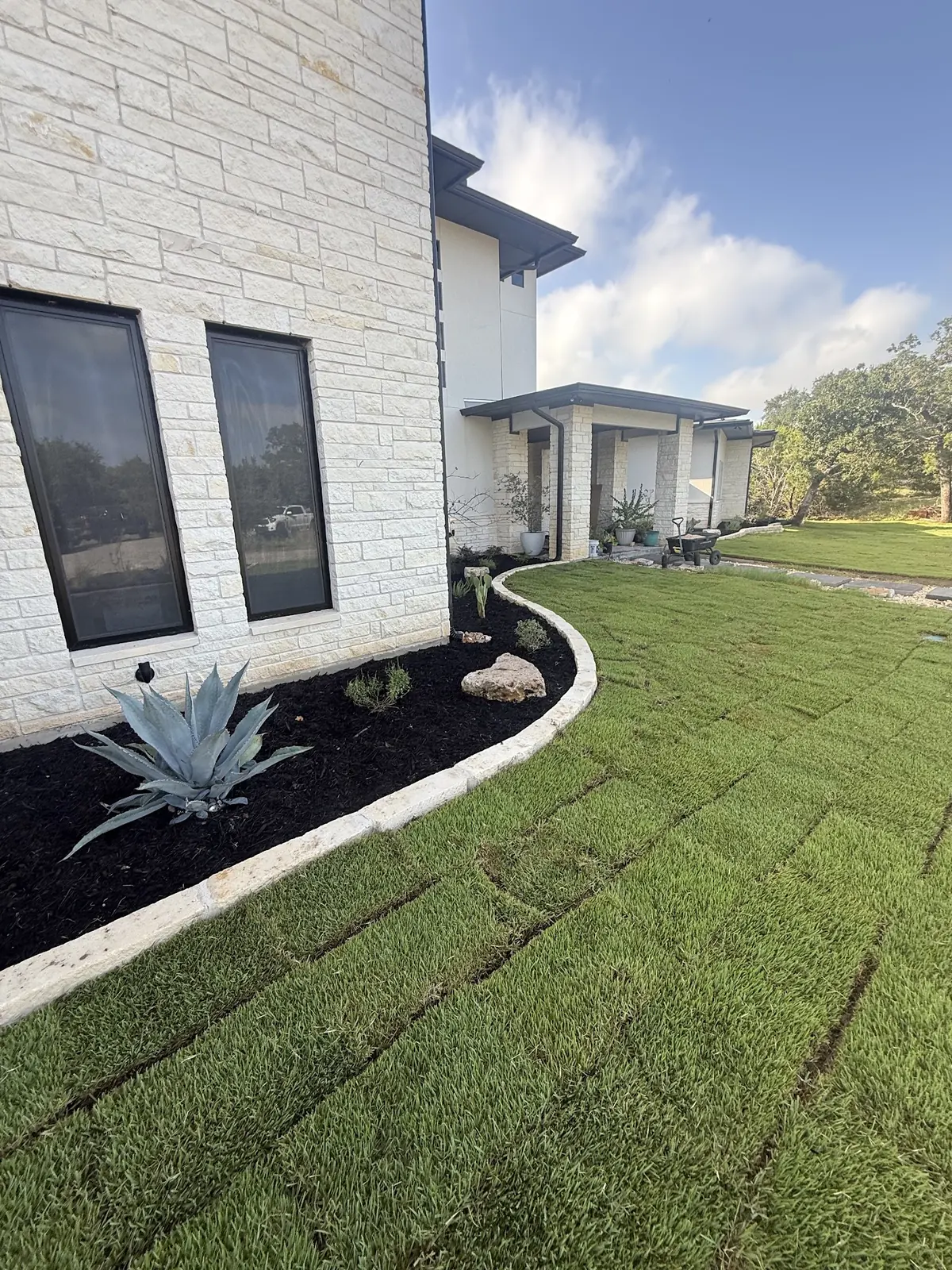
TEMPLE, TEXAS — 31.0982° N, 97.3428° W
GET YOUR OWN NUMBER.
Averages only go so far. Sergio will walk the property with you and give you one price for the whole job — free, with no surprises after.