
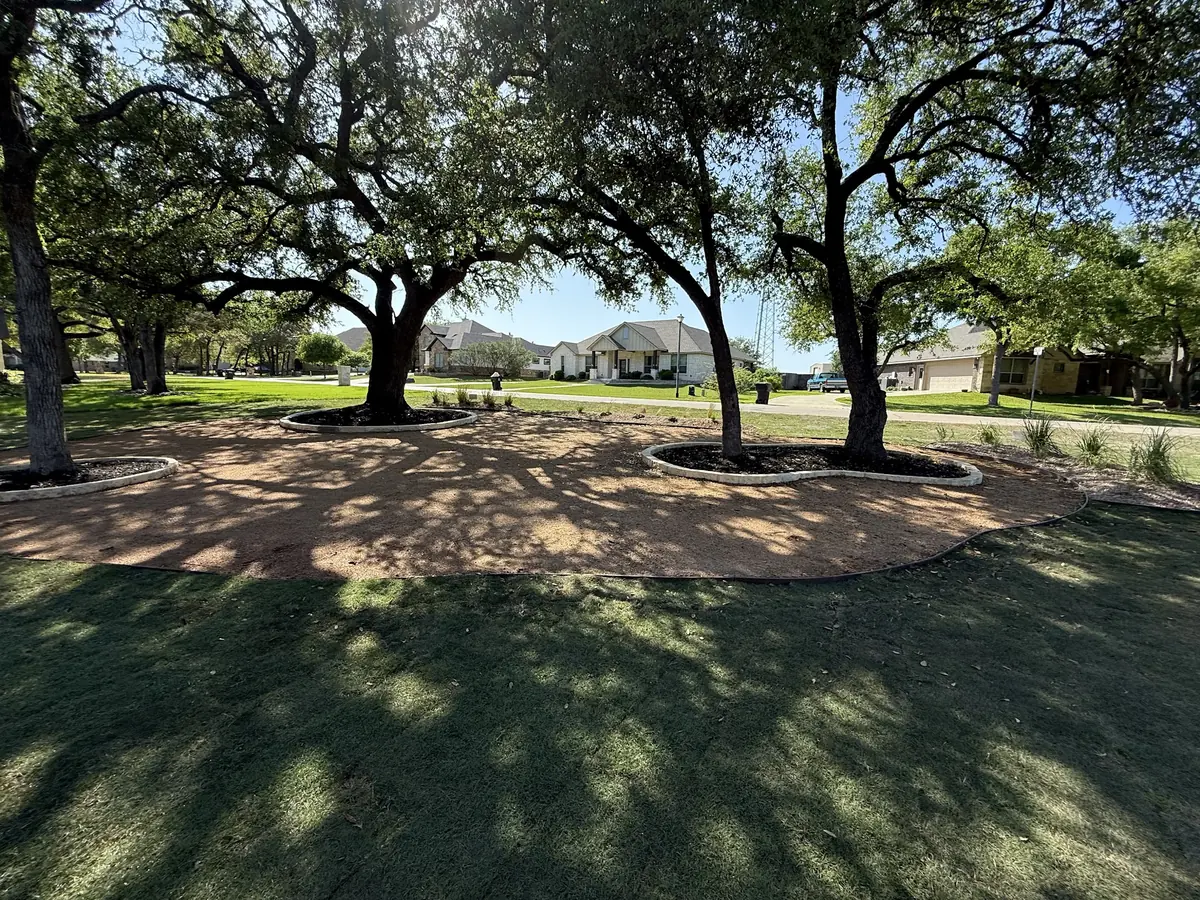
2026 PRICING GUIDE
How Much Does Sod Installation Cost in Temple, TX? (2026)
By Agaves Landscape Construction & Irrigation · Updated · 10 min read
Quick answer
Most Temple homeowners should expect installed sod to land around $1.20 to $1.70 per square foot, based on the published area cost data below.
- Temple cost survey: HomeBlue’s Temple page puts installed sod at $1.20–$1.70 per sq ft, averaging about $1.40 (page last updated 2022). Its Killeen page shows the same range.
- National benchmark: LawnStarter averages $1.65 per sq ft installed; Lawn Love puts professional installation at $1.70–$2.60 per sq ft.
- Per pallet (sod only): LawnStarter lists $150–$450 per pallet and Lawn Love $110–$375; a pallet covers roughly 400–500 sq ft.
- Typical front yard (about 1,000 sq ft): HomeBlue’s Temple figures come to $1,200–$1,700 installed.
- Prep is extra when it is needed: LawnStarter lists old-grass removal at $0.88–$1.84 per sq ft and tilling or grading at $0.90–$2 per sq ft.
For a typical Temple yard of 1,000 to 5,000 square feet, published local figures point to roughly $1,200 to $8,300 installed, and how much ground prep the yard needs is the thing that moves it most.
These are published area averages from the sources listed at the end of this guide, not an Agaves price list. Sergio prices every job after walking the property, and the consultation is free.
What actually drives the cost of sod
Five things set the price of a sod job: how many square feet you are covering, which grass goes down, what has to come off the ground first, what the soil needs before the sod goes on, and how easy the yard is to work in. The sod itself is often less than half the bill.
1. Square footage
Area is the biggest factor, because both the sod and the labor are bought by the square foot. HomeBlue’s Temple page prices a 500 sq ft patch at $610–$830 and a 5,000 sq ft yard at $6,100–$8,300 — ten times the area for roughly ten times the money, with a slightly lower rate per foot on bigger jobs.
2. Grass type
St. Augustine, Bermuda, and Zoysia land close together on price, so pick the grass for the yard, not the invoice. LawnStarter’s national installed figures run $0.98–$1.79 per sq ft for St. Augustine, $1.01–$1.76 for Bermuda, and $1.04–$1.65 for Zoysia. The expensive mistake is putting the wrong grass in the wrong light and paying for it twice.
3. What has to come off first
Laying sod on top of a dead or weedy lawn is how new sod fails. Stripping the old turf is a separate line item, which LawnStarter puts at $0.88–$1.84 per sq ft nationally — on a yard with a lot of Bermuda runners or dallisgrass, that can be as much as the sod itself.
4. Soil and grading
Ground that has to be tilled, leveled, or built up costs more, and around Temple it often needs it. LawnStarter lists tilling and grading at $0.90–$2 per sq ft and topsoil at $12–$50 per cubic yard. New-build lots with packed clay and construction debris sit at the top of those ranges.
5. Access and layout
An open, flat front yard goes fast; a backyard behind a 4-foot gate with beds, trees, and a slope does not. Every pallet that has to be moved by wheelbarrow and every curve that has to be cut by hand adds labor time, and labor time is a big part of what you are paying for.
Sod cost breakdown: Temple vs. national figures
Published Temple-area numbers run a little below the national averages. The table puts the figures side by side so you can see where a quote falls.
| Source and area | Published figure | Notes |
|---|---|---|
| HomeBlue — Temple, TX | $1.20–$1.70 per sq ft installed, avg about $1.40 | Page last updated July 2022 |
| HomeBlue — Killeen, TX | $1.20–$1.70 per sq ft installed, avg about $1.40 | Same range as Temple |
| LawnStarter — national | Avg $0.60 per sq ft sod only; $1.65 installed | Updated December 2025 |
| Lawn Love — national | $1.70–$2.60 per sq ft installed | Includes sod, labor, materials |
| Lawn Love — national | $0.35–$0.80 per sq ft labor only | If you buy the sod yourself |
| Lawn Love — national | $55–$180 delivery fee | Sod farm or supplier delivery |
The practical takeaway: for a Temple, Belton, or Killeen yard on ground that is already in decent shape, a quote in the $1.20–$1.70 per sq ft range is normal. A quote well under that usually means little or no prep. A quote well over it usually means old-lawn removal, grading, or soil work is built in — which may be exactly what the yard needs.
What a pallet of sod costs and how many you need
A pallet of sod covers about 450 square feet and costs roughly $110 to $450 for the grass alone, depending on variety and supplier. Texas A&M AgriLife Extension puts a standard pallet at 50 square yards, or about 450 sq ft; LawnStarter says 450–500 sq ft and Lawn Love 400–500 sq ft.
| Lawn area | Pallets (approx.) | Sod-only cost at $110–$450 per pallet |
|---|---|---|
| 1,000 sq ft | 3 | $330–$1,350 |
| 2,500 sq ft | 6 | $660–$2,700 |
| 5,000 sq ft | 12 | $1,320–$5,400 |
| 10,000 sq ft | 23 | $2,530–$10,350 |
Those totals are simple arithmetic from the published pallet ranges, not a price list. AgriLife recommends ordering a small percentage extra because odd shapes and curves create waste, and LawnStarter notes bulk orders can bring the per-pallet price down. Pallet pricing also leaves out delivery, prep, and labor — the parts that decide whether the sod lives.
St. Augustine vs. Bermuda vs. Zoysia in Central Texas
Pick the grass by how much sun the yard gets: Bermuda for full sun, St. Augustine where there is shade, Zoysia for a bit of both if you will water it. The cost gap between them is small; the gap in how they perform under a Temple live oak is not.
| Grass | Sun / shade | Drought tolerance | Installed cost per sq ft |
|---|---|---|---|
| St. Augustine | Most shade-tolerant warm-season grass; still needs 4–6 hours of light | Good; needs more summer water than Bermuda or Zoysia | $0.98–$1.79 |
| Bermuda | Full sun only; does poorly in shade | Very good to excellent | $1.01–$1.76 |
| Zoysia | Light to moderate shade | Very good, but browns sooner than Bermuda in long drought | $1.04–$1.65 |
St. Augustine: Raleigh, Palmetto, and Floratam
St. Augustine is the usual choice for shaded Temple yards, and the variety matters as much as the species. AgriLife’s St. Augustine fact sheet says Raleigh has excellent cold tolerance and needs about 5–6 hours of direct sun, but can yellow in high summer heat. Palmetto has good shade tolerance at about 5 hours of sun, with less cold tolerance than Raleigh. Floratam handles drought well but has poor cold and shade tolerance and needs at least 6 hours of direct sun — AgriLife calls it best adapted to South Texas and the Gulf Coast. AgriLife also notes St. Augustine is more prone to disease and chinch bugs than the other two grasses.
Bermuda
Bermuda is the toughest grass for an open, sunny Central Texas yard. AgriLife rates it very drought- and traffic-tolerant, which makes it a good fit for kids, dogs, and hot west-facing lots — but it will thin out under trees and it spreads aggressively into beds, which is one reason homeowners pair it with concrete curbing.
Zoysia
Zoysia is the middle option: a dense, fine lawn that takes some shade and handles drought. AgriLife rates its shade tolerance moderate to high and its drought tolerance very good, with the caveat that it tends to brown sooner than Bermuda in an extended dry spell. It needs regular water through summer to stay green.
Sod cost by yard size
Most Temple and Belton subdivision jobs fall in the first three tiers below. The ranges use HomeBlue’s published Temple rate of $1.20–$1.70 per sq ft installed and assume ground that needs only light prep.
About 1,000 sq ft: a front yard or a patch-up
A typical front lawn between the walk and the driveway runs about 1,000 square feet — roughly 25 by 40 feet. HomeBlue’s Temple figures put that at $1,200–$1,700 installed, or about three pallets of sod.
About 2,500 sq ft: front yard plus side yards
At $1.20–$1.70 per sq ft, 2,500 square feet works out to about $3,000–$4,250 installed. For comparison, Lawn Love’s national figures put 2,000 sq ft at $3,400–$5,200 and 3,000 sq ft at $5,100–$7,800.
About 5,000 sq ft: front and back of a typical lot
Re-sodding most of an average Temple lot usually means 4,000–6,000 square feet of lawn. HomeBlue’s Temple page puts 5,000 sq ft at $6,100–$8,300 installed. At this size, prep costs start to matter more than the sod price, so ask for them itemized.
Full new-build yard: 8,000–10,000 sq ft and up
A whole new-construction yard is a different job, because it almost always needs grading and soil work first. HomeBlue’s Temple page puts 10,000 sq ft at $12,200–$16,500 installed. LawnStarter’s example of a one-fifth-acre yard (8,712 sq ft) comes to about $5,200 for sod alone and about $14,400 with professional prep and installation — a good picture of how much of a new-build bill is groundwork. For a bare lot, it usually makes sense to plan beds, edging, and grass together; see landscape design.
Local factors in Temple, Belton, and Killeen
Soil and summer heat change the job more than anything else around here. Temple and Belton sit largely on heavy Blackland Prairie clay; west toward Killeen and Harker Heights, the ground turns shallower and rockier over limestone. Both need different prep.
Clay ground (Temple, Belton, Troy)
Blackland clay holds water, packs hard, and cracks when it dries, so it usually needs loosening and organic matter before sod goes down. AgriLife recommends tilling compacted soil deeply, mixing compost or similar organic matter into the top 4–6 inches, and letting it settle before final grading. Skipping that step is cheap on the day and expensive by August. See sod installation in Temple and Belton.
Rocky, shallow ground (Killeen, Harker Heights)
Where limestone sits close to the surface, the issue is soil depth rather than compaction. AgriLife says turf does best in 10–12 inches of soil and recommends bringing in loam or sandy loam topsoil where the native layer is too thin. That adds material and hauling, at the $12–$50 per cubic yard LawnStarter lists for topsoil, before delivery and spreading. More on that in our Killeen sod installation page.
Best time of year to lay sod
Late spring through early summer is the best window for sod in Central Texas. AgriLife says St. Augustine should ideally go in during late spring and early summer to avoid temperature extremes, and that warm-season sod roots fastest while the grass is actively growing. Sod can go down most of the year, but AgriLife notes fall and winter sod may not root well until spring, and summer sod above 80°F may need water daily.
Watering rules and drought stages
Check the City of Temple’s current drought stage before you schedule sod. Temple operates under a drought contingency plan that can limit landscape watering by stage, and new sod needs more water than an established lawn for its first few weeks. We could not confirm whether Temple’s current rules include an allowance for newly installed sod, so call the city’s utility or water conservation office and ask before the pallets arrive. AgriLife’s own guidance ends the same way: always follow municipal ordinances.
Watering in new sod
New sod has to stay moist until it roots, which usually takes about two weeks in good growing weather. AgriLife’s guidance for Texas sod is specific:
- Day one: water thoroughly right after laying, until the soil underneath is wet to about 4 inches. Lift a few pieces to check.
- While it roots: water every 2–3 days, or often enough to keep the soil moist (not wet) 3–4 inches down. Above 80°F, it may need water daily.
- Don’t drown it: roots grow slower in saturated soil, so more water is not always better — especially on clay.
- After about 2 weeks: start stretching the time between waterings, then move to deep, infrequent watering once it is rooted.
- First mow: once the sod is rooted and being watered less often.
A sprinkler system that actually covers the new lawn makes this far easier than dragging hoses. If zones need adjusting around new sod, that can be handled with irrigation at the same time.
Why new sod fails — and the mistakes that cost homeowners money
Most dead sod in Central Texas comes down to prep and water, not the grass. These five mistakes cause most of it.
1. Hiring on price alone
The cheapest quote is usually the one that skips removal and soil prep and lays sod straight on hard ground. It looks finished on day one and turns brown in the first hot stretch. Compare what is included, not just the total.
2. Laying sod on top of the old lawn
Sod needs direct contact with loose soil to root. Laid over dead grass, weeds, or thatch, it roots poorly and the old weeds grow up through it. AgriLife recommends controlling perennial grassy weeds such as Bermuda and dallisgrass before planting, because they are hard to remove afterward.
3. Leaving it on the pallet
Sod is perishable. AgriLife says it should be installed within 36 hours of harvest — less in hot weather — and warns against planting sod that shows yellow leaves or mildew from heating on the pallet.
4. Wrong grass for the light
Bermuda under a big oak, or Floratam in a shaded backyard, will thin out no matter how well it is installed. Walk the yard at midday and in the afternoon and count the hours of direct sun before choosing.
5. Watering wrong in the first two weeks
Too little and the pieces shrink and gap; too much on clay and the roots sit in mud. AgriLife notes that sod which dries out after laying shrinks and separates, leaving gaps where weeds come in. Plan the watering — and check the city’s drought rules — before the sod is delivered.
How to compare sod quotes
A good sod quote spells out the prep, not just the square footage. AgriLife’s own advice is not to assume a grower or landscaper will also do grading, fertilizing, installation, and post-install work — ask. Before you compare totals, check that each quote answers these:
- Measured square footage, and how much extra is ordered for waste.
- Grass species and variety — “St. Augustine” is not enough; Raleigh, Palmetto, and Floratam behave differently.
- Whether old grass and weeds are removed, and how.
- What grading, tilling, topsoil, or compost is included, and how much.
- Delivery and haul-off.
- Whether sod is rolled after laying and watered in the same day.
- Sprinkler adjustments and a watering plan for the first weeks.
- Who to call if something browns in the first month.
Agaves quotes each yard after walking it, with a free written estimate, and customers in our reviews note there were no costs over the estimate. You can see finished yards on our work page or request an estimate.
FAQs
THE SERVICE
Sod & Planting from Agaves
Sod installation, bed planting, mulch, and rock — laid on prepped ground so it roots instead of dying in July.
Sources
- HomeBlue — Sod Installation Cost, Temple, TX — Temple installed cost per sq ft and by yard size; page last updated July 2022
- HomeBlue — Sod Installation Cost, Killeen, TX — Killeen installed cost per sq ft; page last updated July 2022
- LawnStarter — How Much Does Sod Cost? — National averages, sod by grass type, pallet, and prep costs; updated December 2025
- Lawn Love — How Much Does It Cost to Lay Sod? — National installed, labor, pallet, delivery, and lawn-size costs; updated December 2025
- Texas A&M AgriLife Extension — St. Augustinegrass Lawn Management (EHT-144) — Shade needs, establishment timing, Raleigh/Palmetto/Floratam traits
- Texas A&M AgriLife Extension — Turfgrass Selection for Texas — Shade and drought ratings for Bermuda, St. Augustine, Zoysia
- Texas A&M AgriLife Extension — Turfgrass Establishment for Texas (B-6239) — Soil prep, pallet size, 36-hour rule, watering new sod
- Texas A&M AgriLife Extension — How to Select and Install Sod — Installation and watering-in guidance for new sod
More cost guides
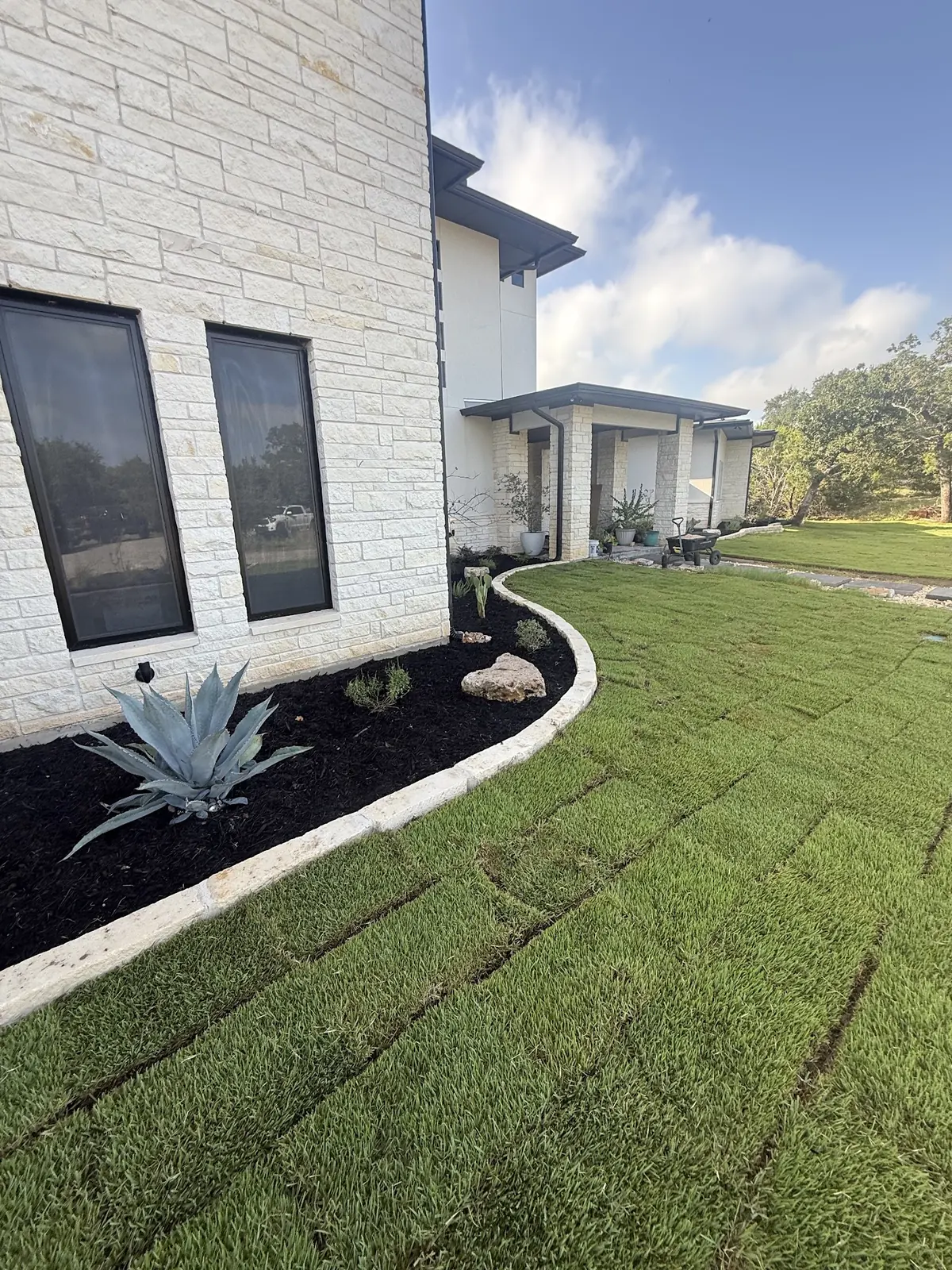
TEMPLE, TEXAS — 31.0982° N, 97.3428° W
GET YOUR OWN NUMBER.
Averages only go so far. Sergio will walk the property with you and give you one price for the whole job — free, with no surprises after.